Some days on the road go exactly to plan. This one did not, at least not at the start.
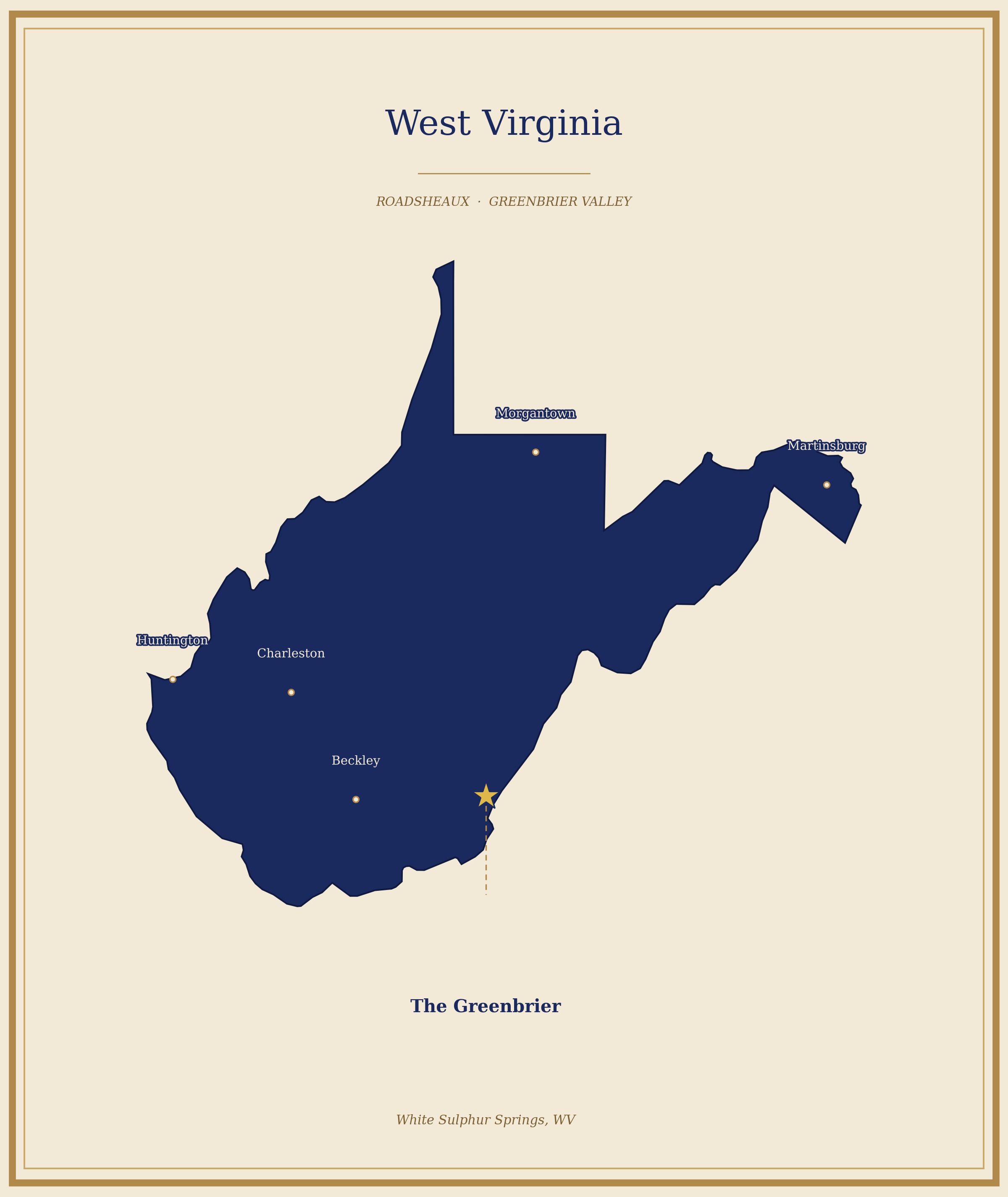
I had booked our Greenbrier bunker a couple of months ago, back when we were still running on central time, and somewhere in the shuffle I dropped it onto the calendar at the wrong hour. So we rolled into White Sulphur Springs, West Virginia feeling pretty pleased with ourselves, walked up ready for our tour, and found out we had already missed our slot. The small mercy was that the tour had been canceled anyway. They rebooked us for the next morning. That knocked our New River Gorge National Park plans sideways for the following day, but Donna and I have learned that the road tends to reward the folks who can shrug and adjust. We figured we would sort it out, and we did.
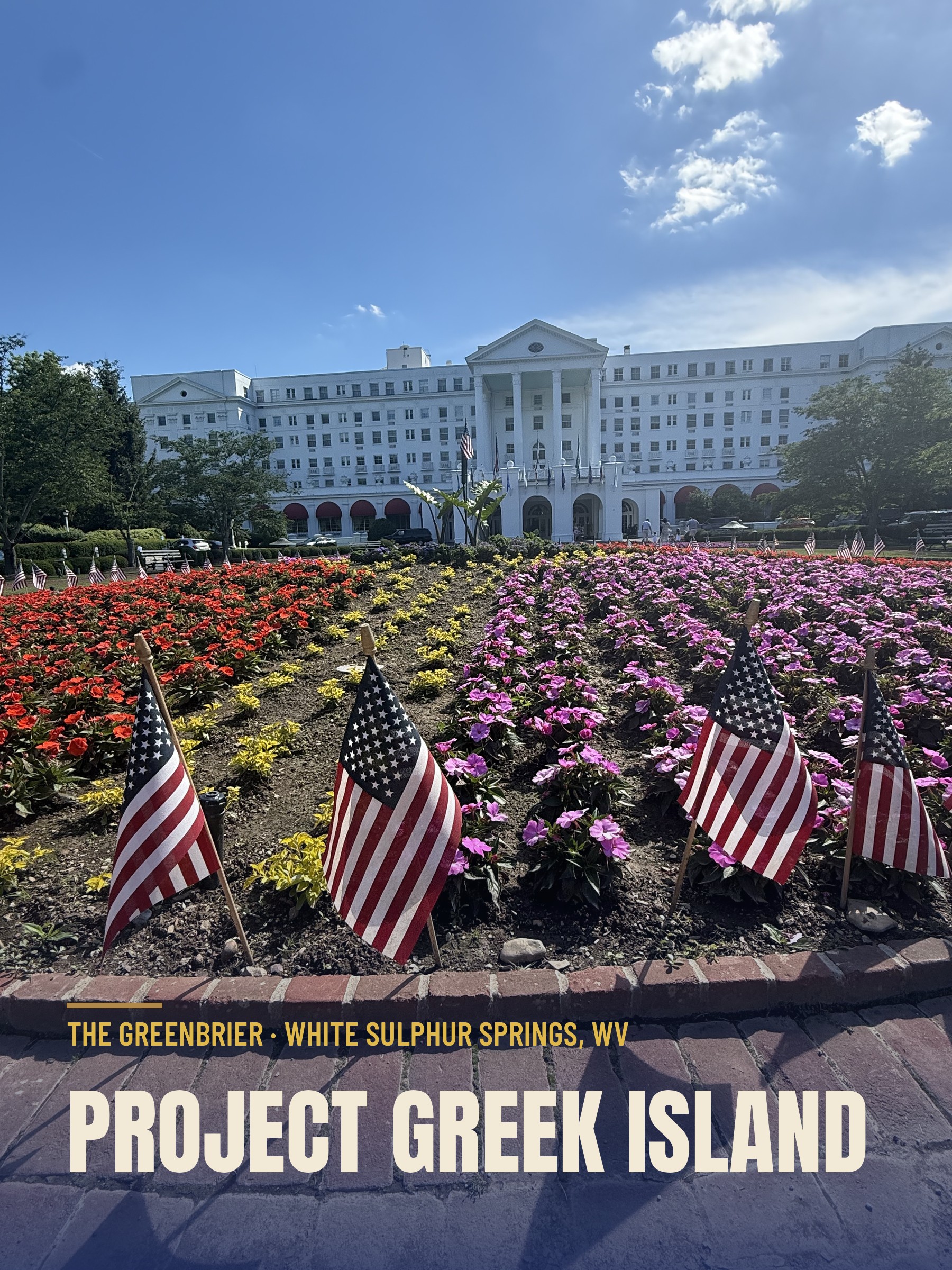
That left us about an hour to take in the Greenbrier itself, which is its own kind of show.
A grand old resort
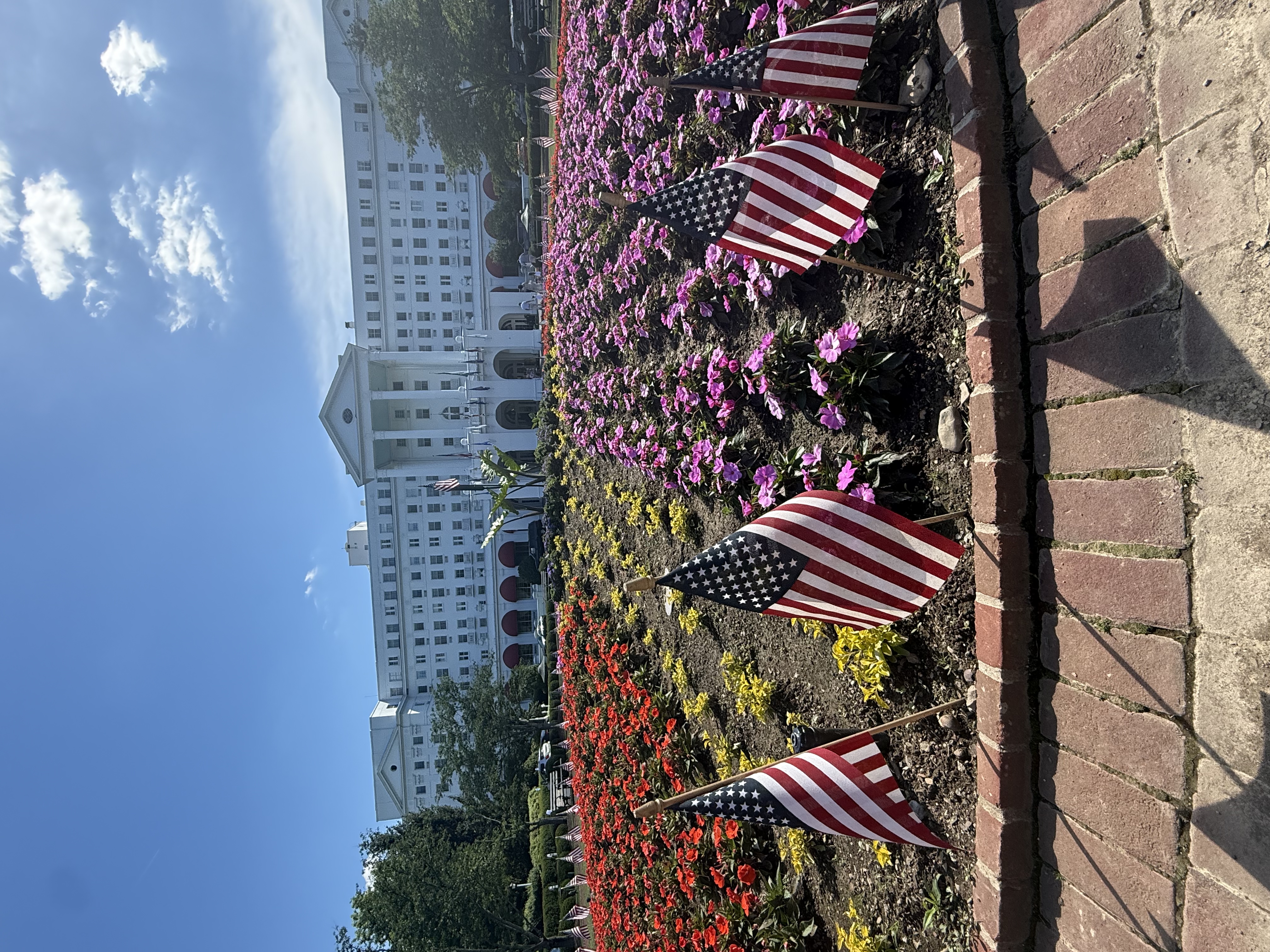
The Greenbrier sits up against the Allegheny Mountains, a great sweep of brilliant white buildings against green hills, with manicured grounds and porches that go on forever. It has been drawing people to its mineral springs since the 1700s, and over the years it has hosted something like two dozen presidents. During World War II the government even used the property, first as a holding spot for Axis diplomats and then as a sprawling Army hospital. There is a lot of history soaked into the place before you ever get to the part that made us drive out here.
Then you step inside, and the whole mood changes. The interiors are pure Dorothy Draper, the designer who made the Greenbrier look like nowhere else on earth. We are talking bold florals the size of dinner plates, black and white
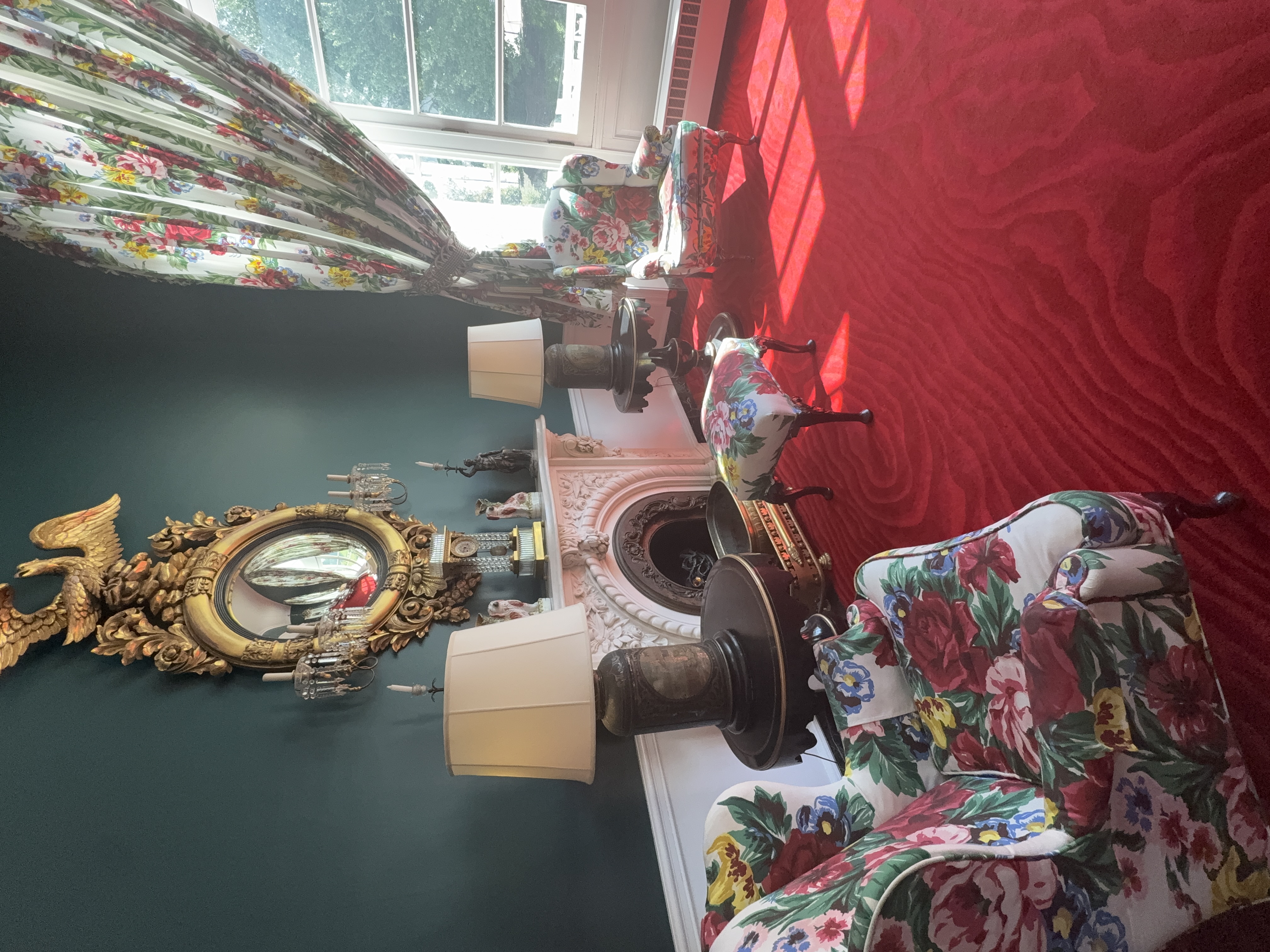
checkerboard floors, and colors that have absolutely no business sitting next to each other but somehow work anyway. Hot pinks against deep greens, stripes, rhododendron prints everywhere you look. Wild and a little crazy, and we loved it. You could spend an afternoon just wandering the halls with your head on a swivel.
The secret under the floor
Here is the part that still gets me. For thirty years, tucked beneath one wing of that cheerful, flowery hotel, the United States government kept a fully stocked bunker built to house the entire U.S. Congress in the event of nuclear war.
It was code-named Project Greek Island. Construction ran from 1959 to 1962, right through the heart of the Cold War, and the cover story was simple. They built it at the same time as the West Virginia Wing, the big aboveground addition to the hotel, so all the digging and concrete just looked like a fancy hotel expansion. The Greenbrier held a standing agreement with the government that if a real crisis hit, the whole resort would convert to federal use. Guests held conferences in rooms that were secretly congressional chambers and never had a clue. The secret held until 1992, when a Washington Post reporter named Ted Gup published the story. The bunker was decommissioned almost immediately after that, since a hideout nobody knows about stops being useful the moment everybody knows about it.
Going in
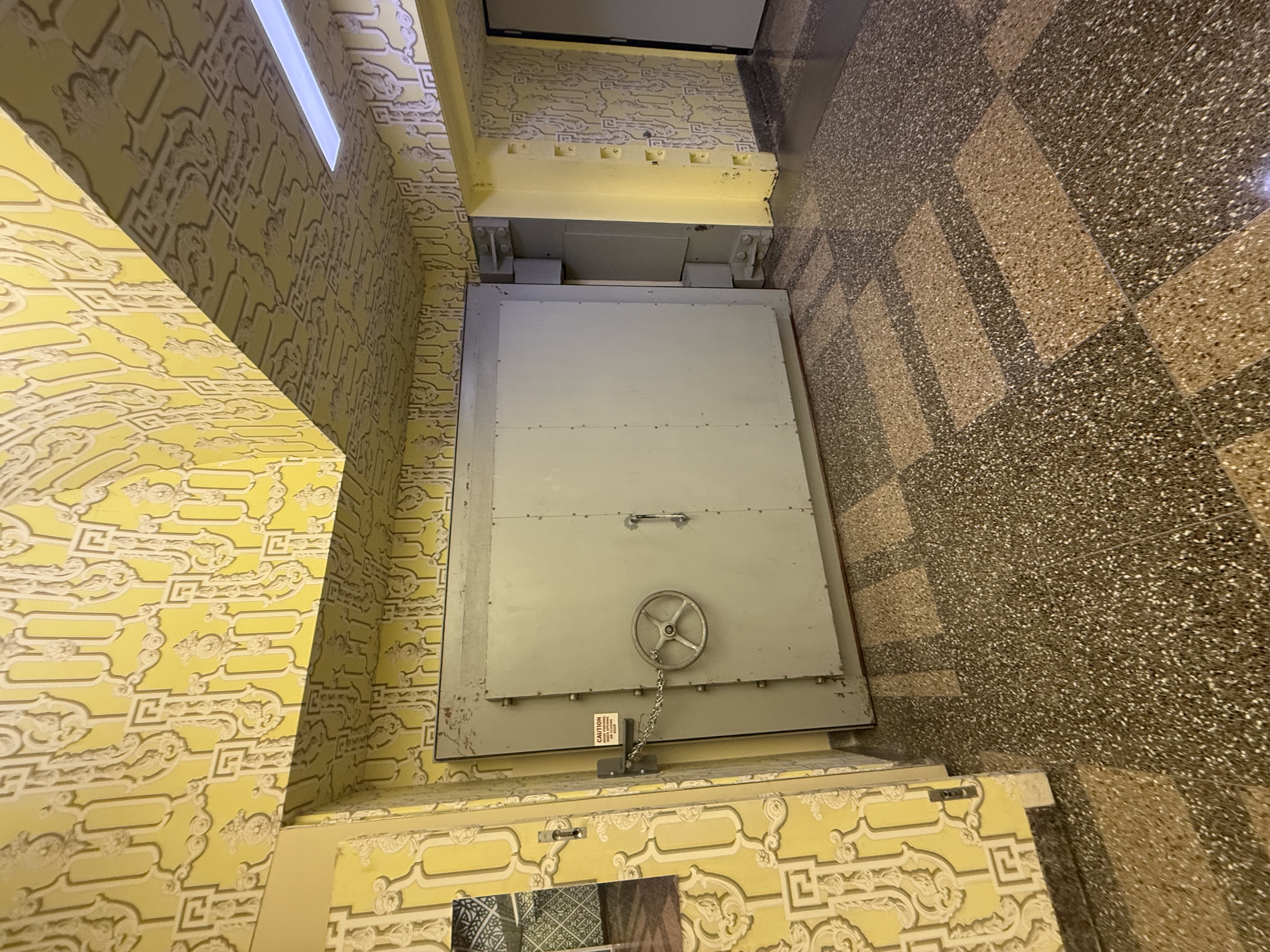
The tour is the real reason you come. No cell phones and no photography are allowed past a certain point. The exhibit hall is as far as your phone gets to go, so everything past that lives in your memory and the guide's voice.
What we saw down there was something else. You enter through one of the enormous blast doors, the kind built to seal off the outside world, with decontamination showers waiting just inside so members of Congress could strip down, scrub off fallout, and change before going any further. There are the congressional chambers, the broadcast facilities, and a dining hall that is its own little lesson in human nature. The place was designed for 1,100 people, but the dining hall only seated about 400 at a time. So they built it to be a touch uncomfortable on purpose, bright and no-frills. It would make patrons eat and move along rather than linger over coffee.
The details kept coming. Every member of Congress, along with families and staff, had prescriptions on file, so the pharmacy stayed fully stocked and ready. There were supplies to last at least 40 days. The whole thing was designed to ride out nuclear fallout, not a direct hit, and it was set up to be reached fast by plane (there used to be a landing strip on the property), by car, or by train, with a station sitting right across the street from the resort.
A sweet finish
We came up out of that strange piece of Cold War history, wandered over to the chocolate shop and treated ourselves to chocolate covered strawberries, which were plump and delicious.
A bunker built for the end of the world, capped off with strawberries dipped in chocolate. We enjoyed the tour, we enjoyed the Greenbrier, and even after the blown reservation the day before, it made for a memorable way to kick off the trip.
Juneaux, for the record, was not allowed on the bunker tour. She held down the rig and supervised our return.
Gallery