Harpers Ferry National Historical Park sits a little over an hour from our basecamp at Cherry Hill Park, and the drive west
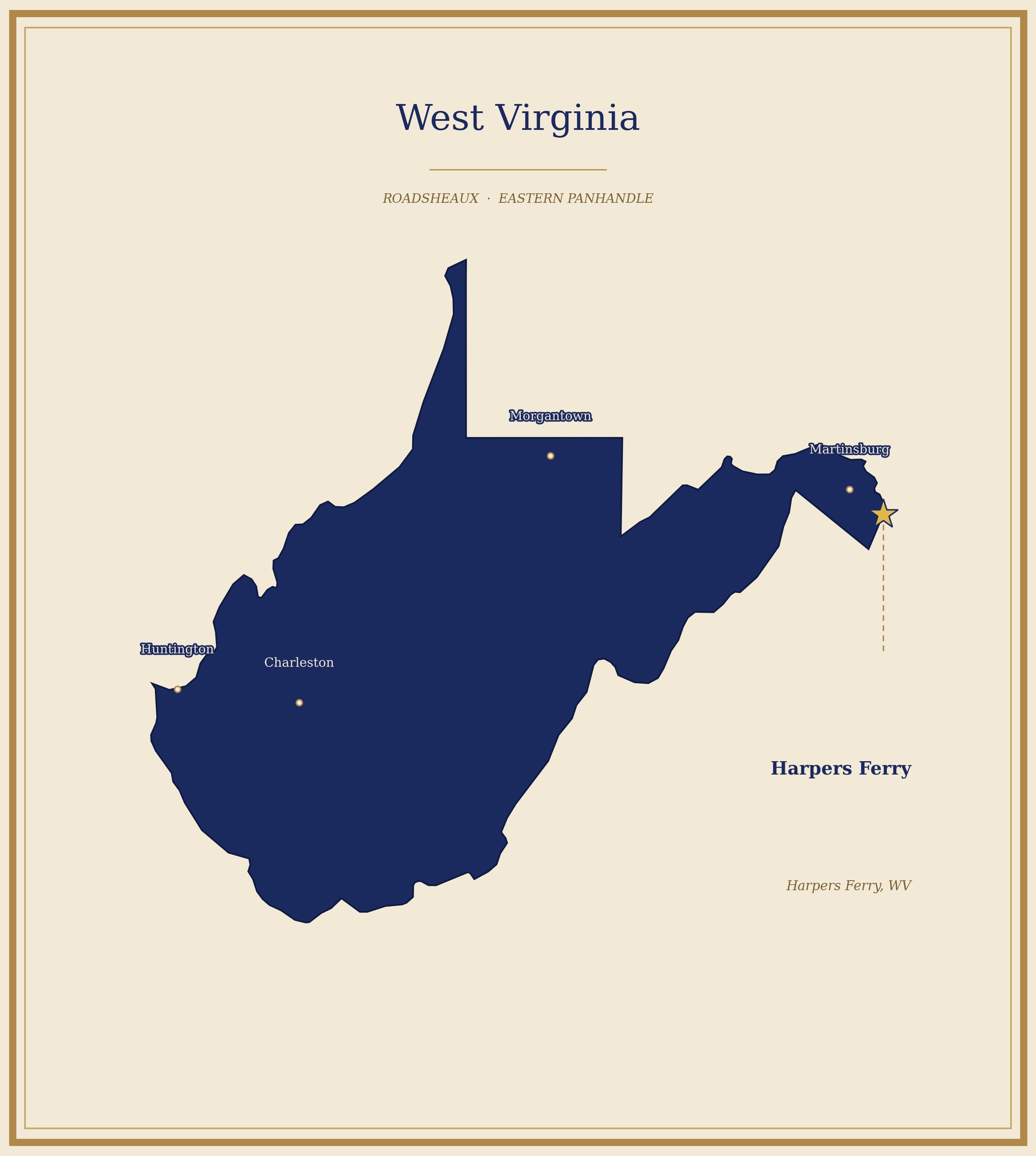
traded the flat sprawl around College Park for the rolling shoulders of the Appalachians. We made one mistake before we even arrived, and that was leaving Juneaux back at the rig. We had no idea how dog friendly the town would turn out to be. The only places she would have been turned away from were a few of the indoor exhibits, and everywhere else along those old streets she would have been welcome.
There is no parking down in the historic lower town, so we left the truck at the visitor center and caught the National Park shuttle. The ride is short and the shuttle runs about every fifteen minutes.
The Point Between Two Rivers
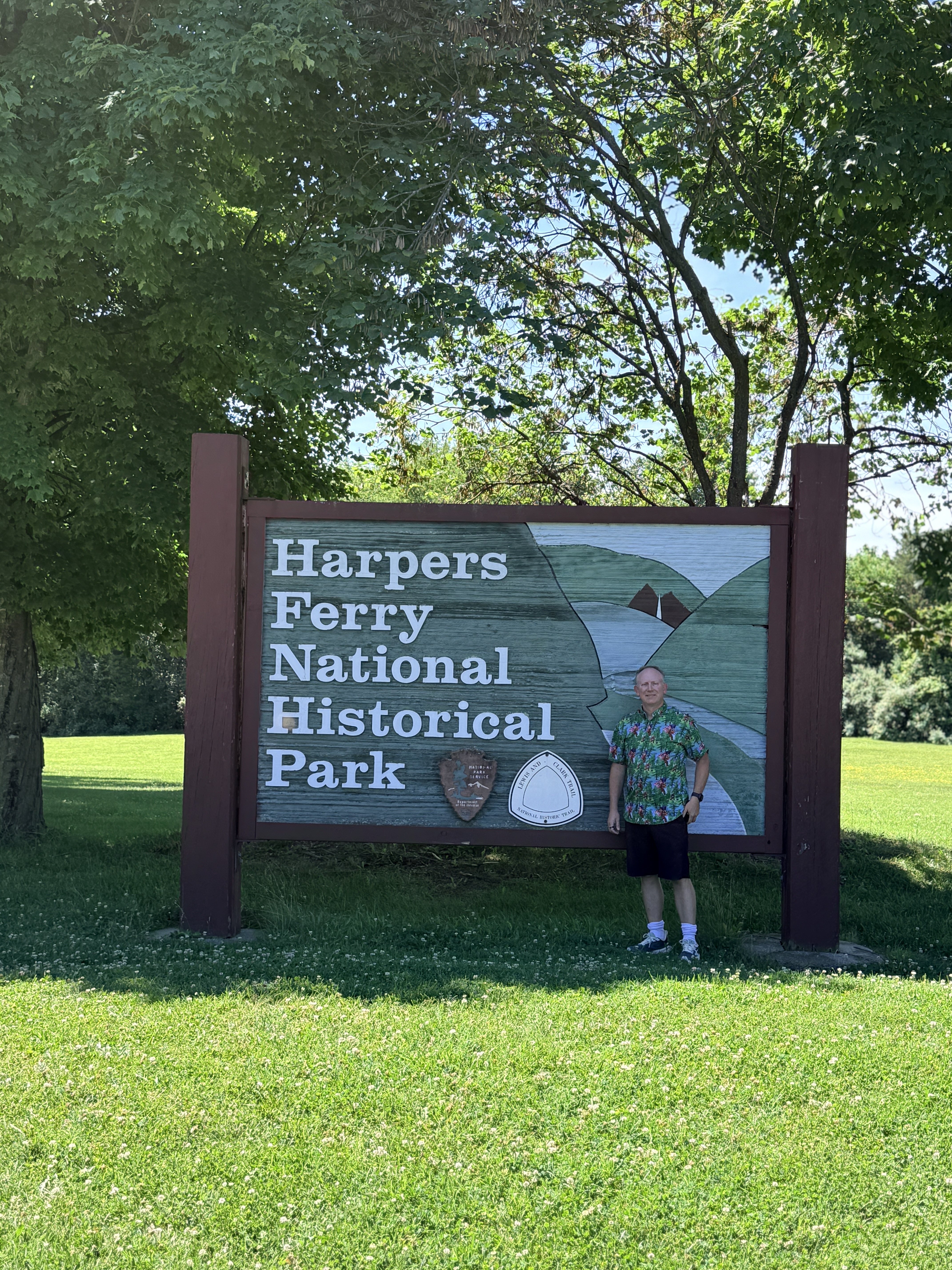
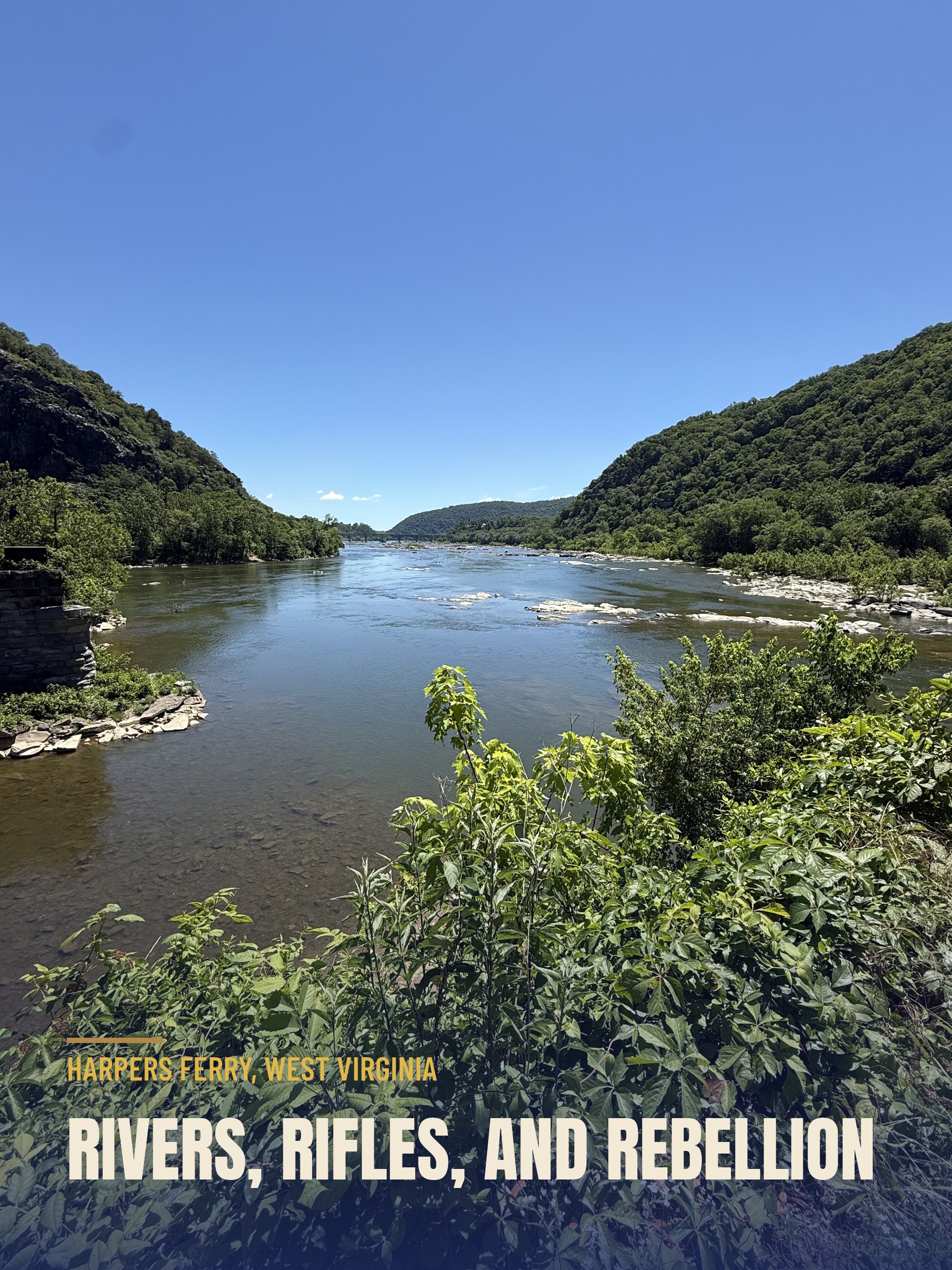
The whole town sits on a narrow point of land where the Shenandoah River pours into the Potomac. You stand at the tip and watch two rivers become one, with the ridges of three states folding away into the haze. The lower town belongs to the National Park, and it is a tight cluster of historic buildings dating to the early and mid 1800s. As you climb the hill, the park gradually shades into the modern town. The buildings up there are still old and full of character, but they have been given over to restaurants, shops, and bed and breakfasts rather than preserved as museum pieces.
We walked across the pedestrian bridge that runs alongside the railroad tracks and crosses the river. The views of the confluence from out on that bridge were the best of the entire day. Standing over the water with the trains rumbling past and the two rivers braiding together below, you get the full measure of why this point of land has mattered for so long.
John Brown's Fort
The most famous building in town is a small brick fire-engine house, and the story behind it changed the country. In October 1859, the abolitionist John Brown and roughly twenty-one men seized the federal armory here, hoping to capture its weapons and spark a regional uprising against slavery. The plan came apart almost immediately. No uprising came, and within a day the local militia had the raiders pinned down. United States Marines under the command of Robert E. Lee stormed the little fire-engine house where Brown made his final stand. That building is still standing today, and it is known as John Brown's Fort. Brown was captured, tried, and hanged that December. The raid itself failed completely, but it lit a fuse. It made Brown a martyr in the North, it confirmed the South's deepest fears, and it helped push the country into the Civil War barely a year later.
Why the Town Mattered, and Why It Faded
It is easy to wonder how a place this small ended up at the center of so much history, and the answer is the same two
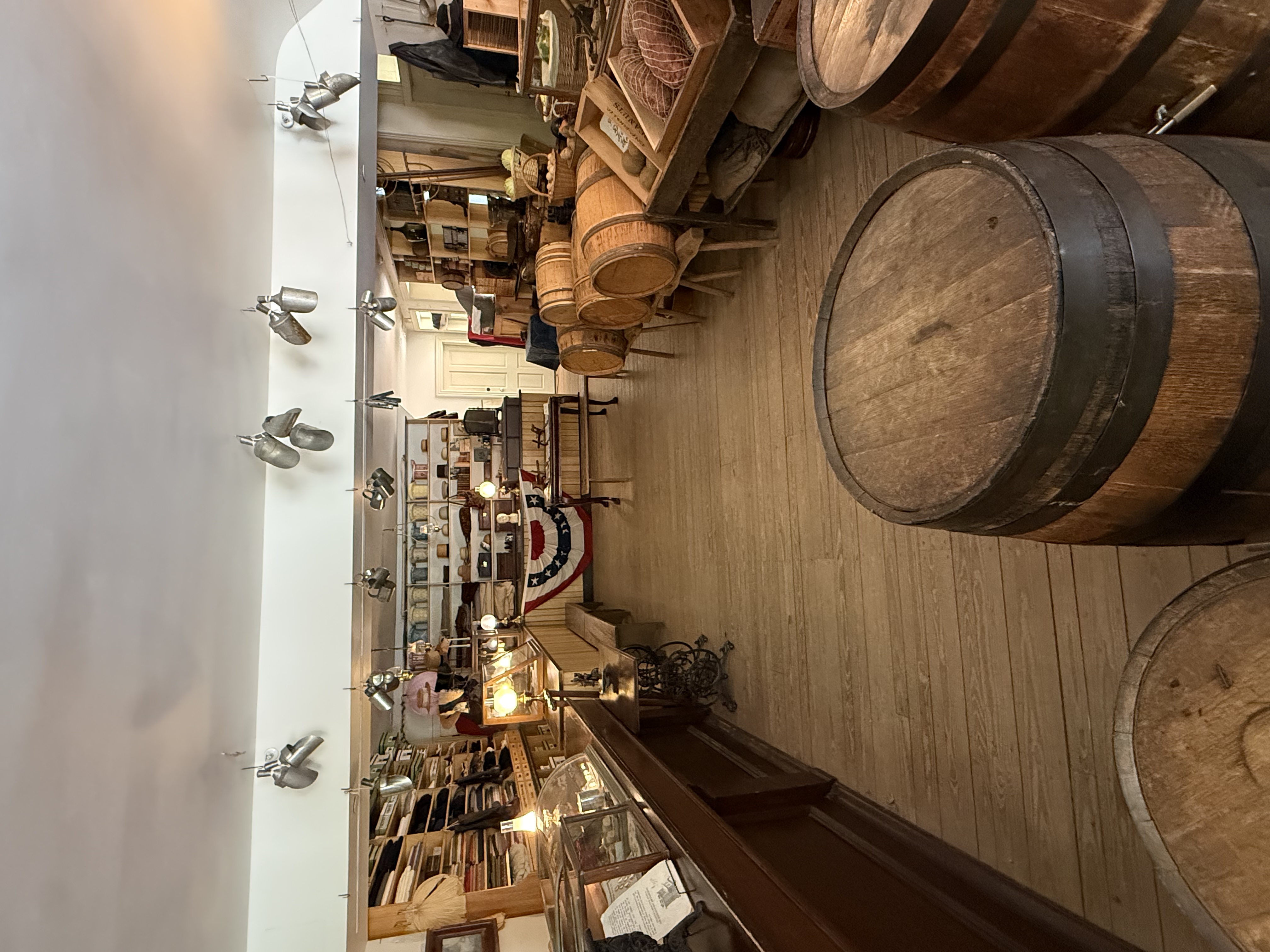
rivers you keep looking at. George Washington chose this spot for a national armory, and the rivers powered a hub of mills, factories, the B&O Railroad, and the C&O Canal. That strategic position made Harpers Ferry a Civil War prize, and the town changed hands repeatedly through the fighting. The war wrecked the armory, and it never came back. Then the floods finished the job. A town built at the meeting of two rivers pays for that location eventually, and major floods in 1870, 1889, 1936, and on through 1996 washed out whatever tried to rebuild. Industry and population drained away over the decades. What ultimately saved the town was its own past. It became a National Historical Park in 1963, and today the restored lower town draws hikers and history buffs instead of arms makers.
Where Modern Manufacturing Was Born
The piece of Harpers Ferry history that stuck with me has nothing to do with the war. This little armory town helped invent the way America makes almost everything. In the 1820s, a gunsmith named John Hall set up at the armory and began building rifles using machine tools and precise gauges, so that the parts were truly interchangeable. Any trigger fit any rifle, and any barrel fit any stock. Before this, every gun was hand fitted by a single craftsman, one at a time. Hall proved that you could mass produce complex machines from standardized, swappable parts. That approach spread into clocks, sewing machines, bicycles, and eventually the automobile. When Henry Ford rolled out his moving assembly line in 1913, he was building on a foundation laid here nearly a century earlier. No interchangeable parts means no assembly line, and it is remarkable to think that idea took root in a small town wedged between two rivers.
Lunch at the Rabbit Hole
We ate lunch at Rabbit Hole, which came highly recommended online and sits right in town a short walk from the national park grounds. Their craft beer list is enormous. A lot of the local options were not rated very highly, so I went with a Citrus HopSlam from Bell's, a variant of HopSlam I had never tried, and it was a solid pour for a national beer. For
food I ordered the brisket and burnt ends, and both were very good. The brisket was not quite what I expected, since it came in a thicker cut than I am used to, but it was moist, flavorful, and delicious.
A Brewery on the Cliff
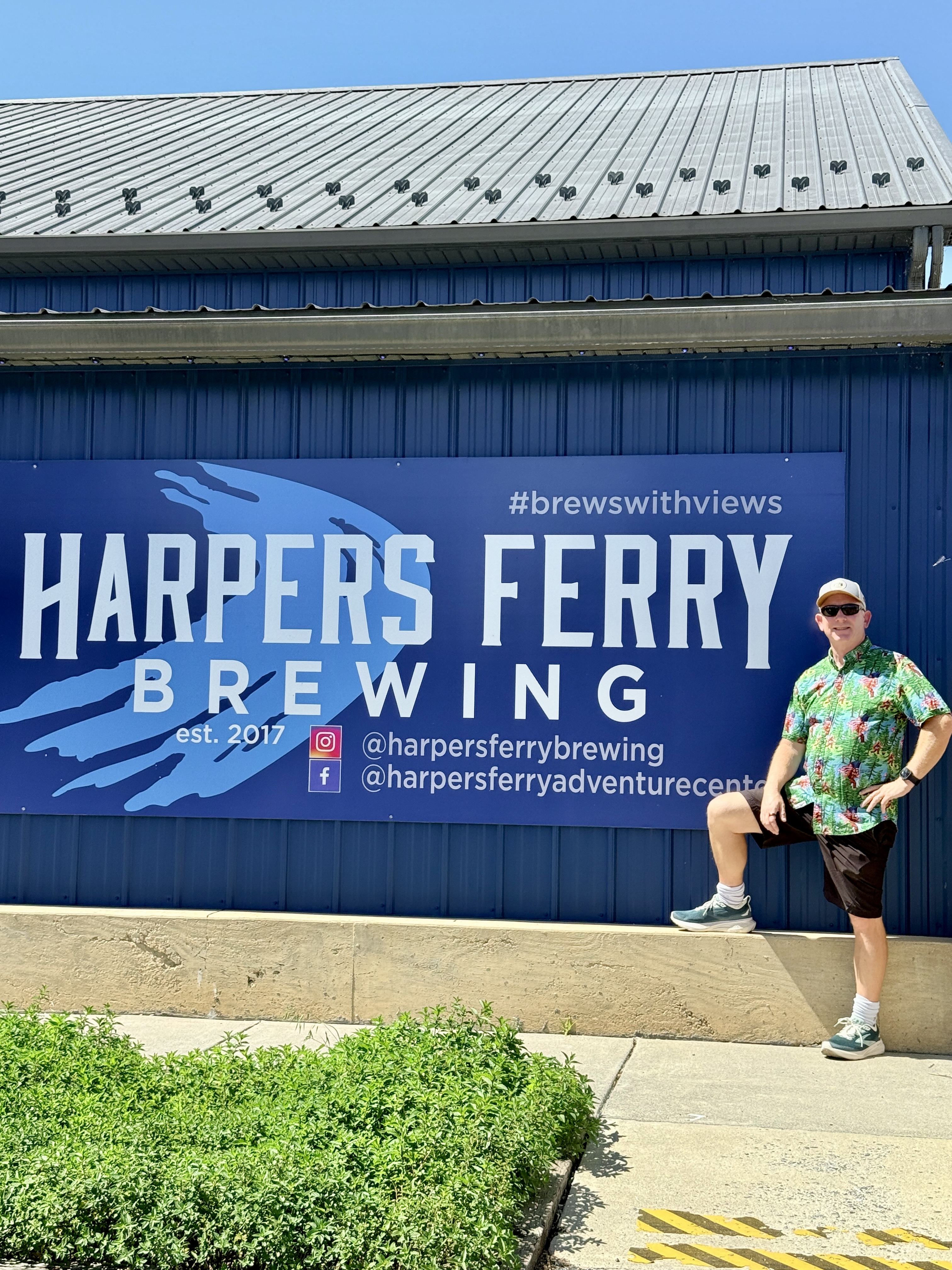
On the drive back toward camp, we pulled in at Harpers Ferry Brewing, which sits up on the cliffs of the Virginia side above the Potomac River, only a few minutes from the lower town. It was one of the busiest breweries I have ever set foot in, and the parking lot was enormous to match. Beyond the indoor taproom there were several large outdoor seating
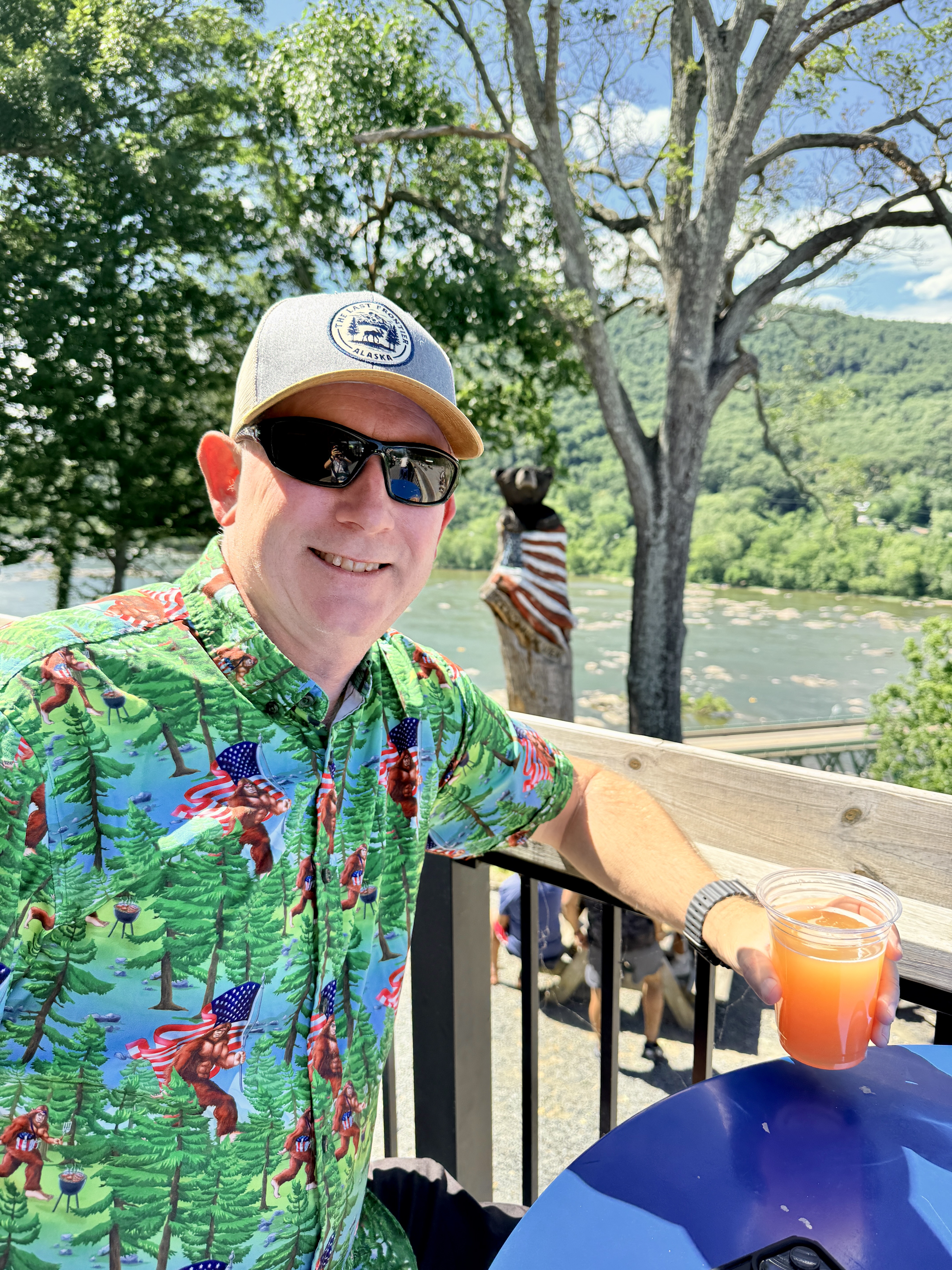
areas spread across the hillside, and every one of them was full. The reason became obvious the moment we walked out back. The views over the Potomac were amazing, with the river bending far below and the town of Harpers Ferry tucked into the distance where Virginia, West Virginia, and Maryland all come together. The beer was good rather than great, but nobody drives up here only for the beer. You come for the view, and one look off that hillside explains why the lot was so full.
Harpers Ferry packs a national armory, a raid that helped start a war, and the birth of modern manufacturing into a town you can walk across in an afternoon, and the rivers tie all of it together.
Gallery
Check out our other posts about this stop:
- Washington, DC: The Bucket List You Can't Finish in a Week
- Cherry Hill Park: A Capital Basecamp on a Family Farm
- Goosebumps in the Gallery: A Day with Two Branches of Government
- Big Marble and a Quiet Hill: The Mall Monuments and Arlington
- The C&O Canal and the Streets of Georgetown
- Just a Long Fly Ball from Camden Yards: Where the Sultan of Swat Began
- Crab Cakes and Meatballs: A Day Around Baltimore's Harbor
- A Long Porch Above a Wide River: George Washington's Mount Vernon