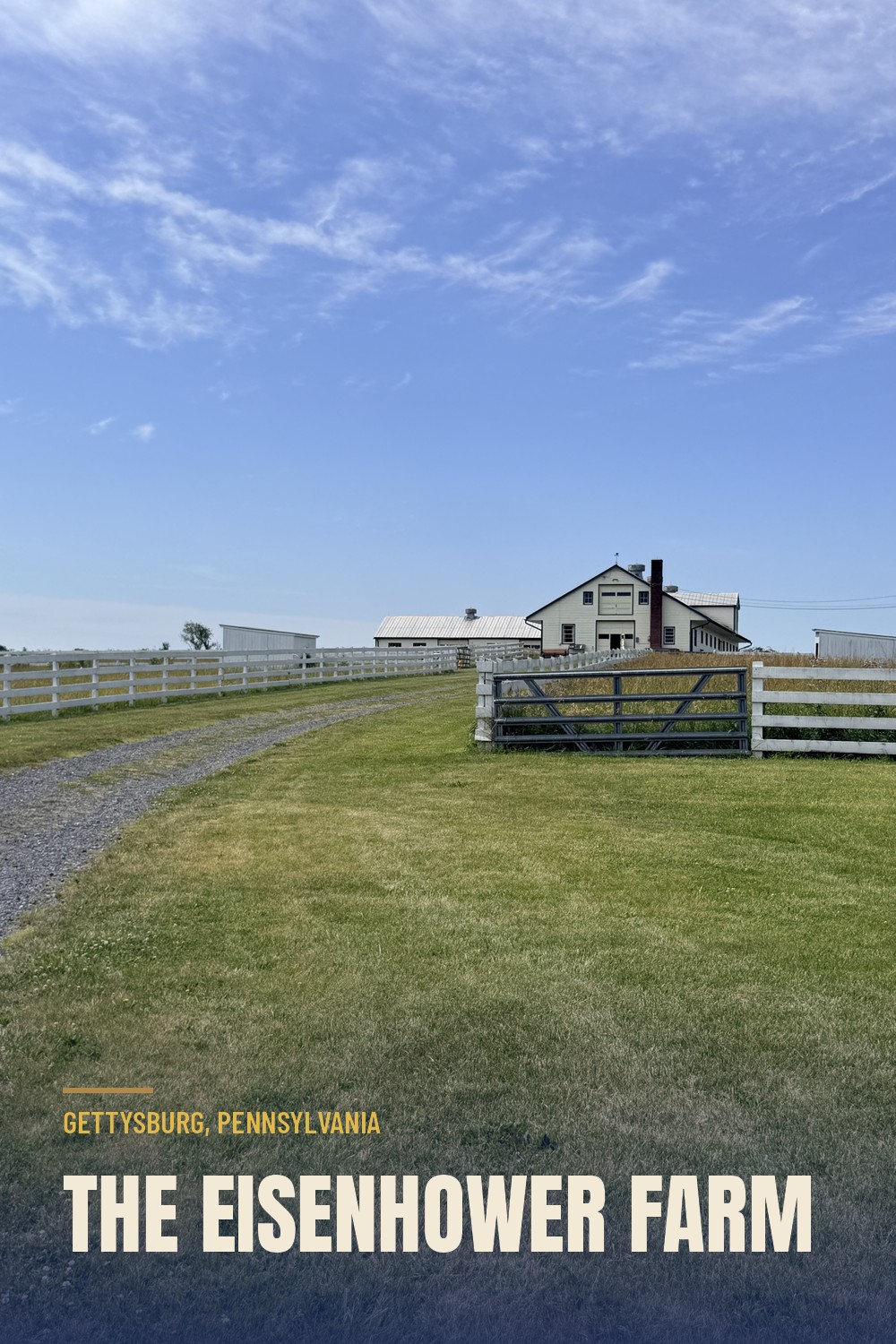
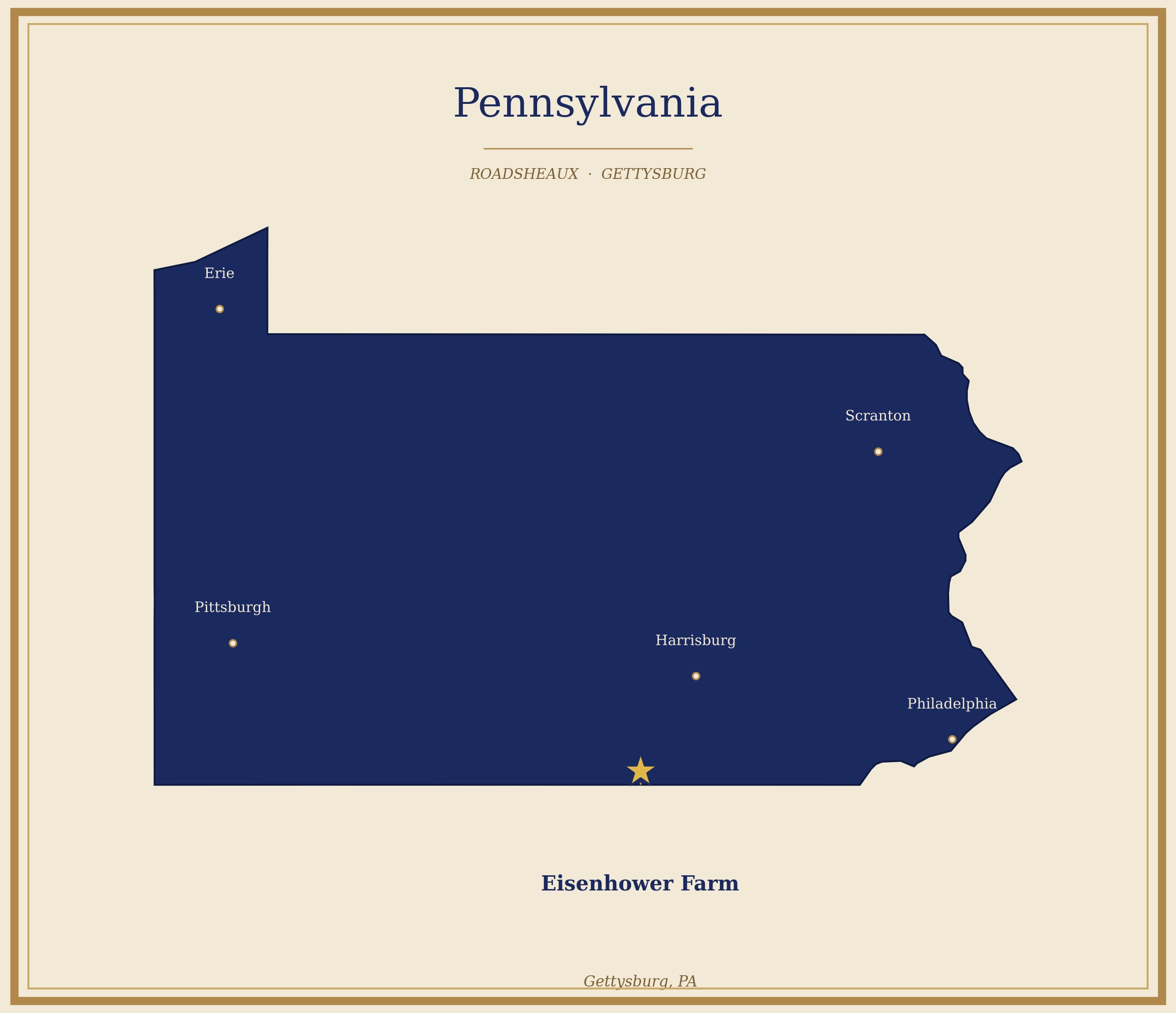
When you spend a few days parked on the southern end of the Gettysburg battlefield, it is easy to forget that the most famous resident of these fields never fired a shot here. Dwight D. Eisenhower bought a farm beside the battleground long after the guns went quiet, and he made it the only home he and Mamie ever owned. The Eisenhower National Historic Site sits just a few hundred yards down the road from the Gettysburg Battlefield Resort, where we were staying, so reaching it was about as easy as a stop gets on this trip.
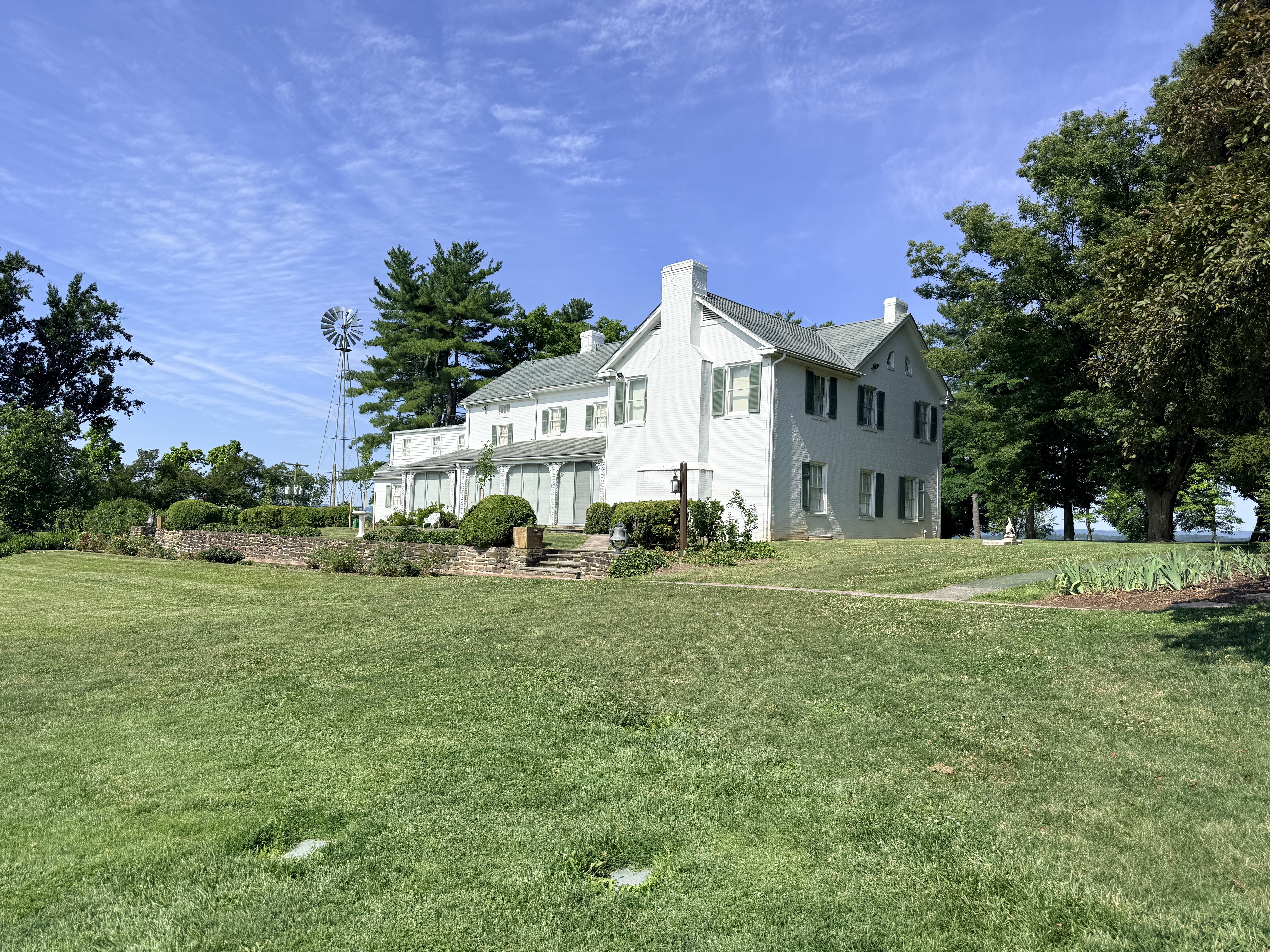
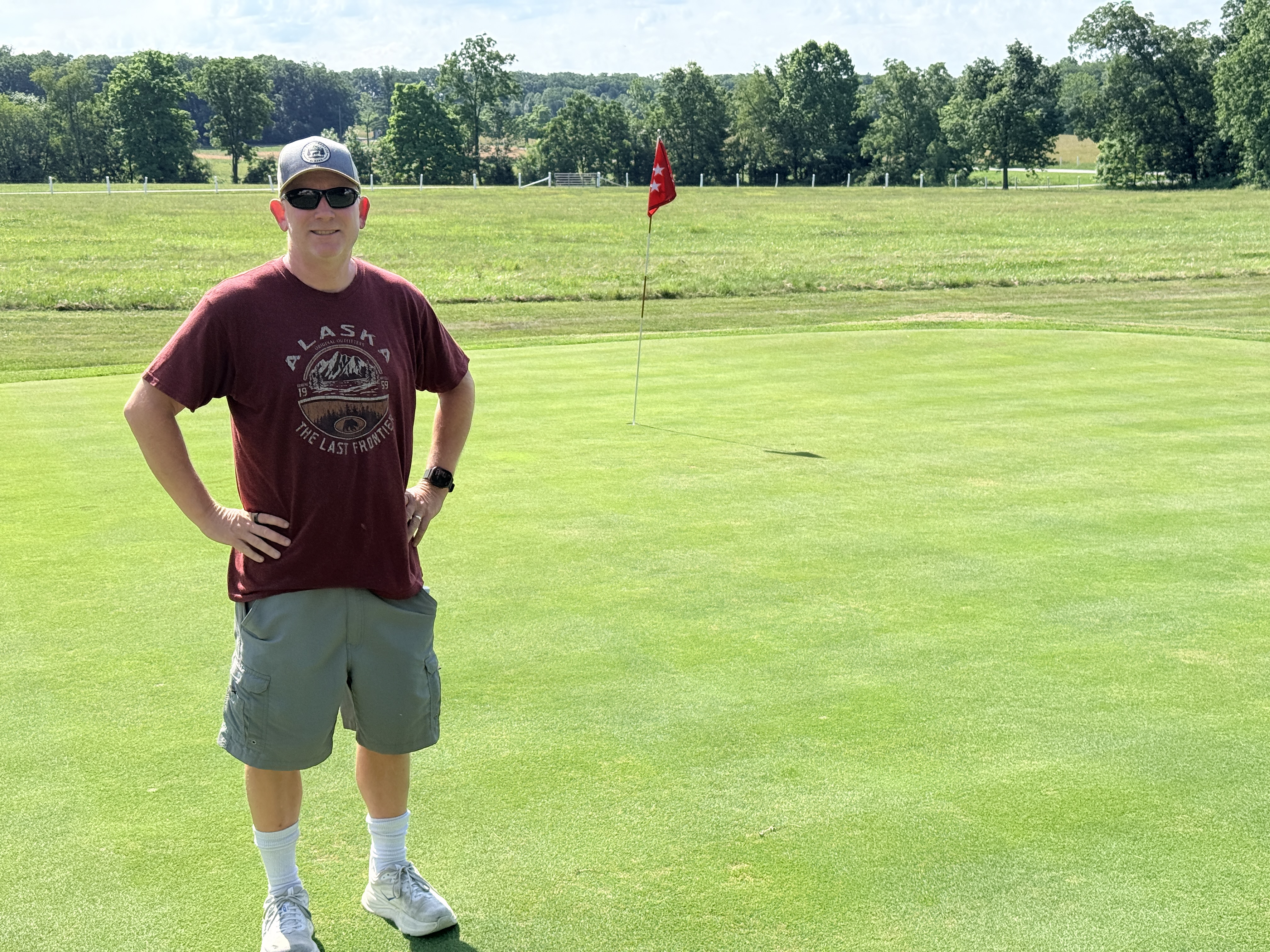
Tours of the farmhouse run every half hour during the busy season, and no reservation is required. We rolled up a few minutes before ten, found that the ten o'clock tour was already full, and settled in to wait for the ten-thirty. That wait turned out to be a gift, because it pushed us out onto the grounds with time to wander. We poked around the barn, the Secret Service office, and the garage where a presidential limousine still sits. Parked in there was also the little Crosley runabout that Eisenhower used to drive dignitaries around the property, and the list of passengers reads like a Cold War summit. Winston Churchill, the Prime Minister of Great Britain, and Charles de Gaulle, the President of France, both rode along on these very acres. I even walked down to the President's own putting green.
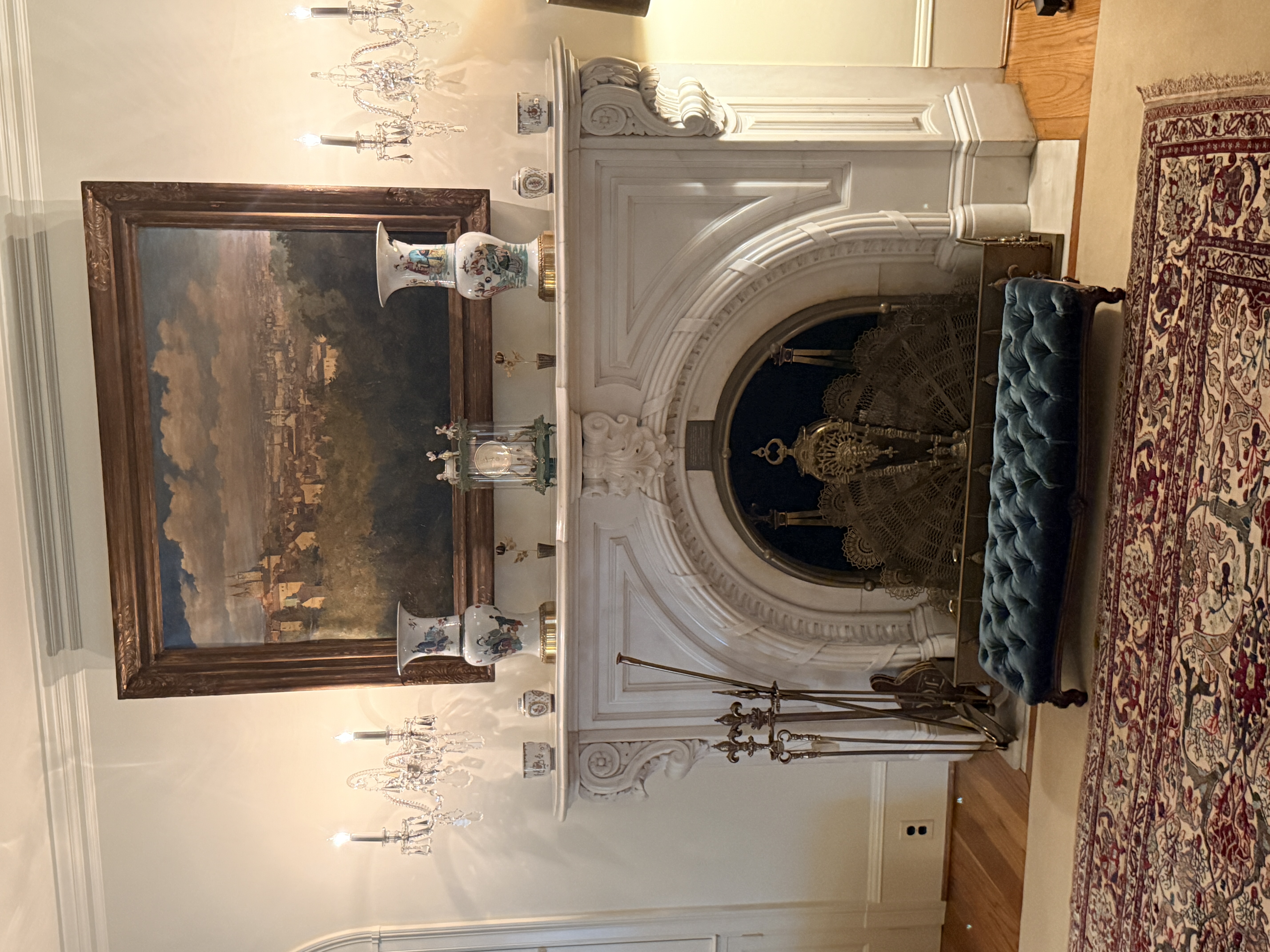
The living room was our favorite room, and the fireplace at its center came straight out of the White House, where it had been installed back in the 1870s. The whole house is filled with gifts and keepsakes from around the world. There is a striking black lacquer coffee table from Korea, given to Eisenhower after he brought the Korean War to a close, a silk rug from the Shah of Iran, and pieces sent by the Queen of England, among countless others. For all of that, his desk was plain and simple, and from that modest piece of furniture he signed more than three hundred pieces of legislation.
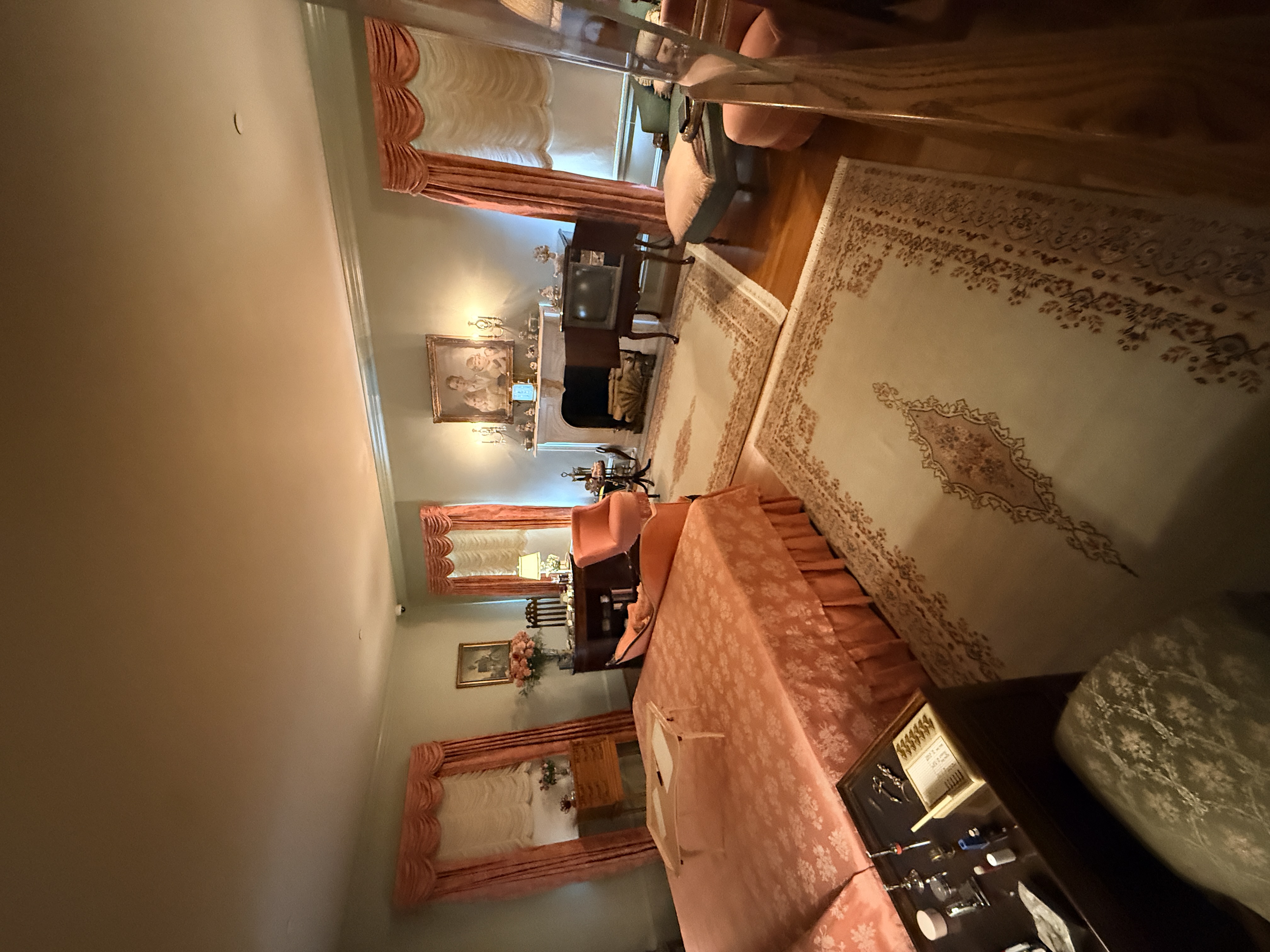
The personal touches stuck with me as much as the state gifts did. I never pictured a five-star general and former President living with a pink bedroom, but Mamie loved the color and decorated her room in it vibrantly. Ashtrays sit throughout the house as well, a quiet reminder that Eisenhower smoked something close to four packs a day at one point.
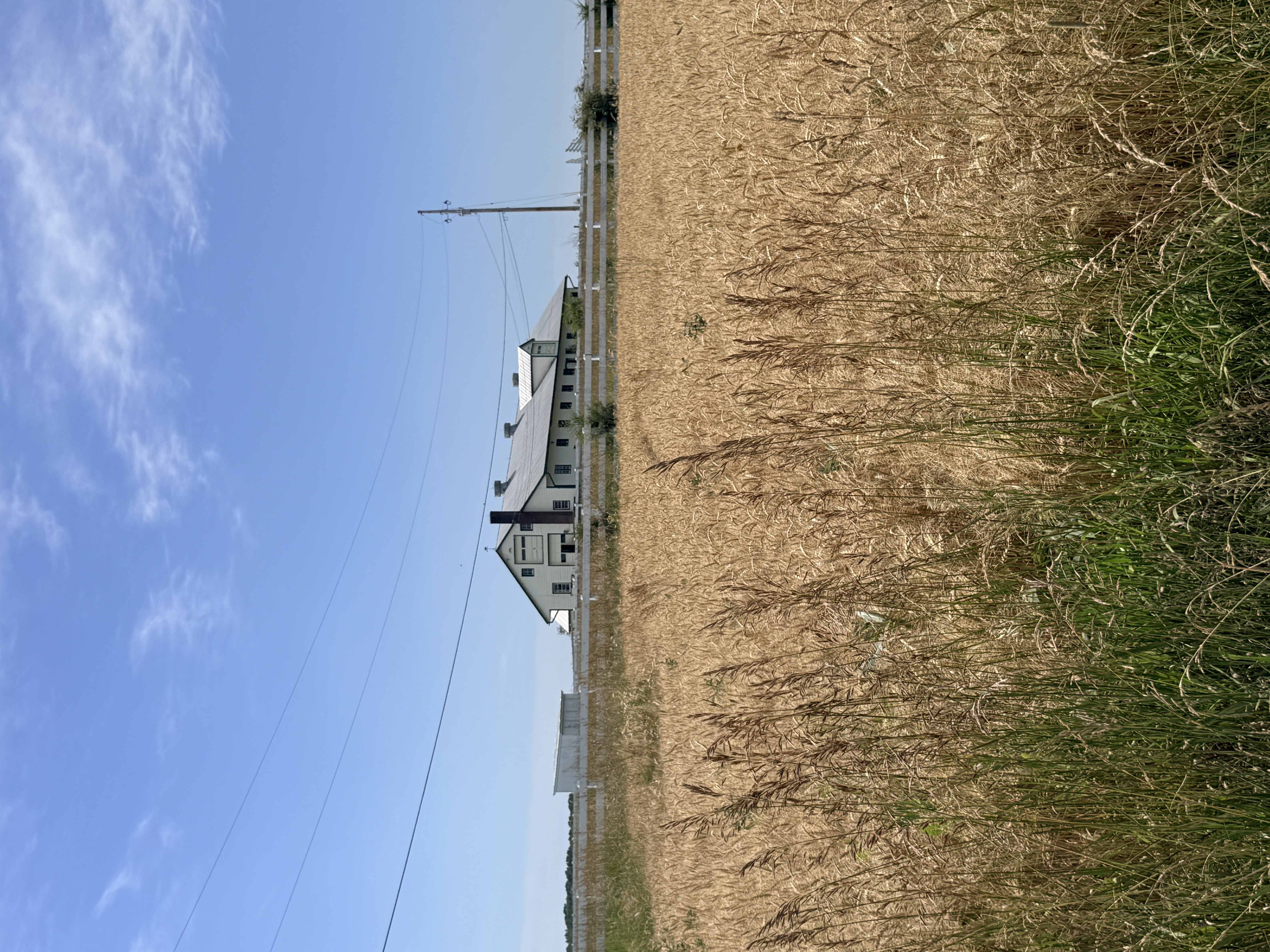
The farm itself was every bit as much a part of his life as the house. We walked up the hill to the show barn, where the real story of this place comes into focus. After his retirement, Eisenhower raised purebred Aberdeen Angus cattle and built a high-quality breeding program that grew into a nationally recognized show herd of Black Angus. His animals took home awards at the Pennsylvania Farm Show and the International Stock Show in Chicago, and they lived better than some people do, with rubbing pads and dedicated feeding areas built right into the barn. This was no hobby pasture. It was a working operation that Eisenhower cared about deeply.
More than anything, the farm was his retreat. Even while he was President, he spent significant time here, trading the pressure of Washington for the quiet of the Pennsylvania countryside. Standing on the grounds, with the battlefield stretching out beyond the fence lines, it is easy to understand why he kept coming back.
If you find yourself in Gettysburg, the Eisenhower farm is worth a couple of hours of your day, and it pairs naturally with the battlefield you came to see. It is a rare chance to step inside the private world of a man who carried enormous weight, and to see the place where he set it down.
A few practical notes for planning. As of the summer of 2026, guided tours of the farmhouse run Thursday through Monday from 10 a.m. to 3 p.m., every half hour, from May 28 to October 6. Guided tours of the farm itself run June 2 through September 2 at 10 a.m. and 1 p.m. Those times were current for our visit, so check with the National Park Service for the latest schedule before you go.
Gallery