For years, Bush's Beans was the one that got away. Every time we came through East Tennessee we had our camper, we were pushing to get
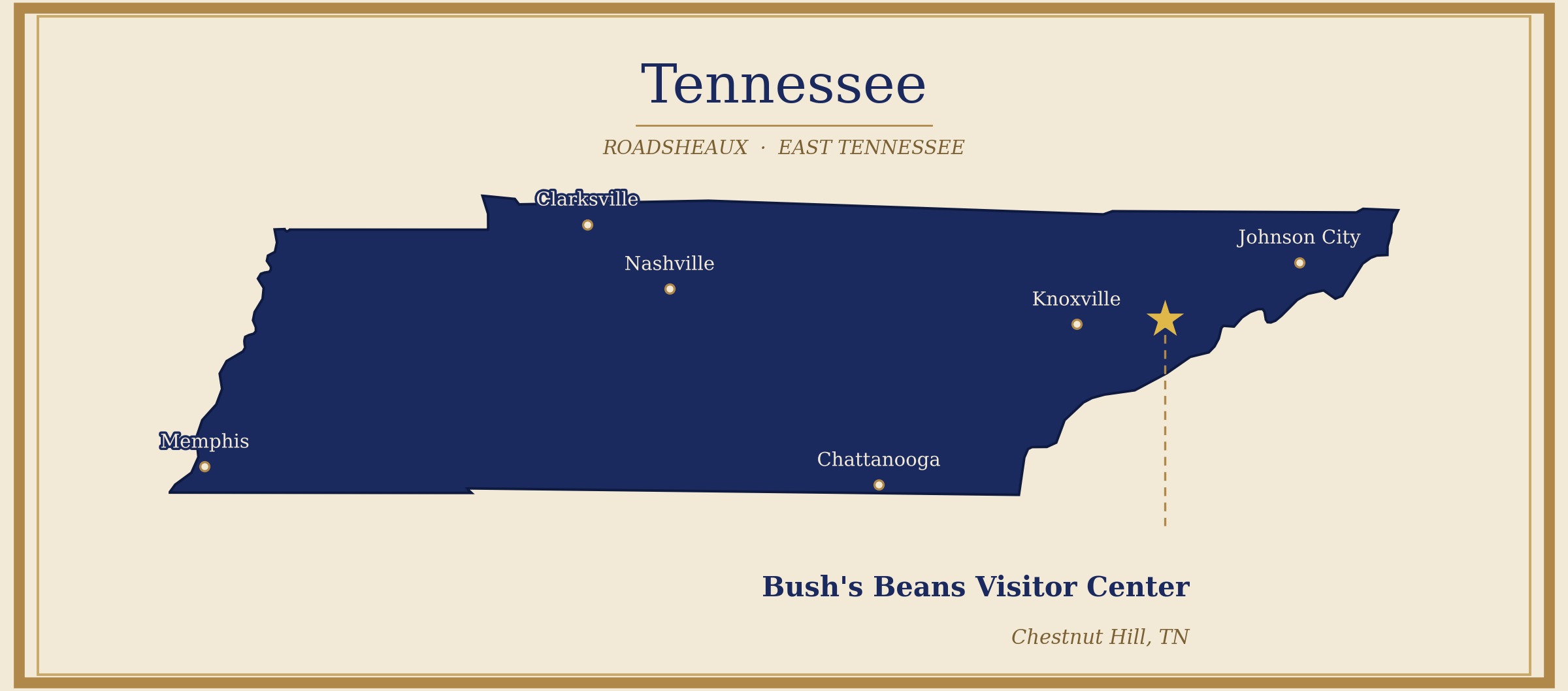
somewhere, and by the time we landed in the Pigeon Forge and Gatlinburg orbit there was always too much going on to backtrack for a bean museum. So we blew right past it, trip after trip. Here is the part that stings a little: Bush's has a big, easy parking lot that would have easily held the campers. This time, with the truck and a slow afternoon out of our base at Anchor Down, we finally pulled in.
The country store that built an empire
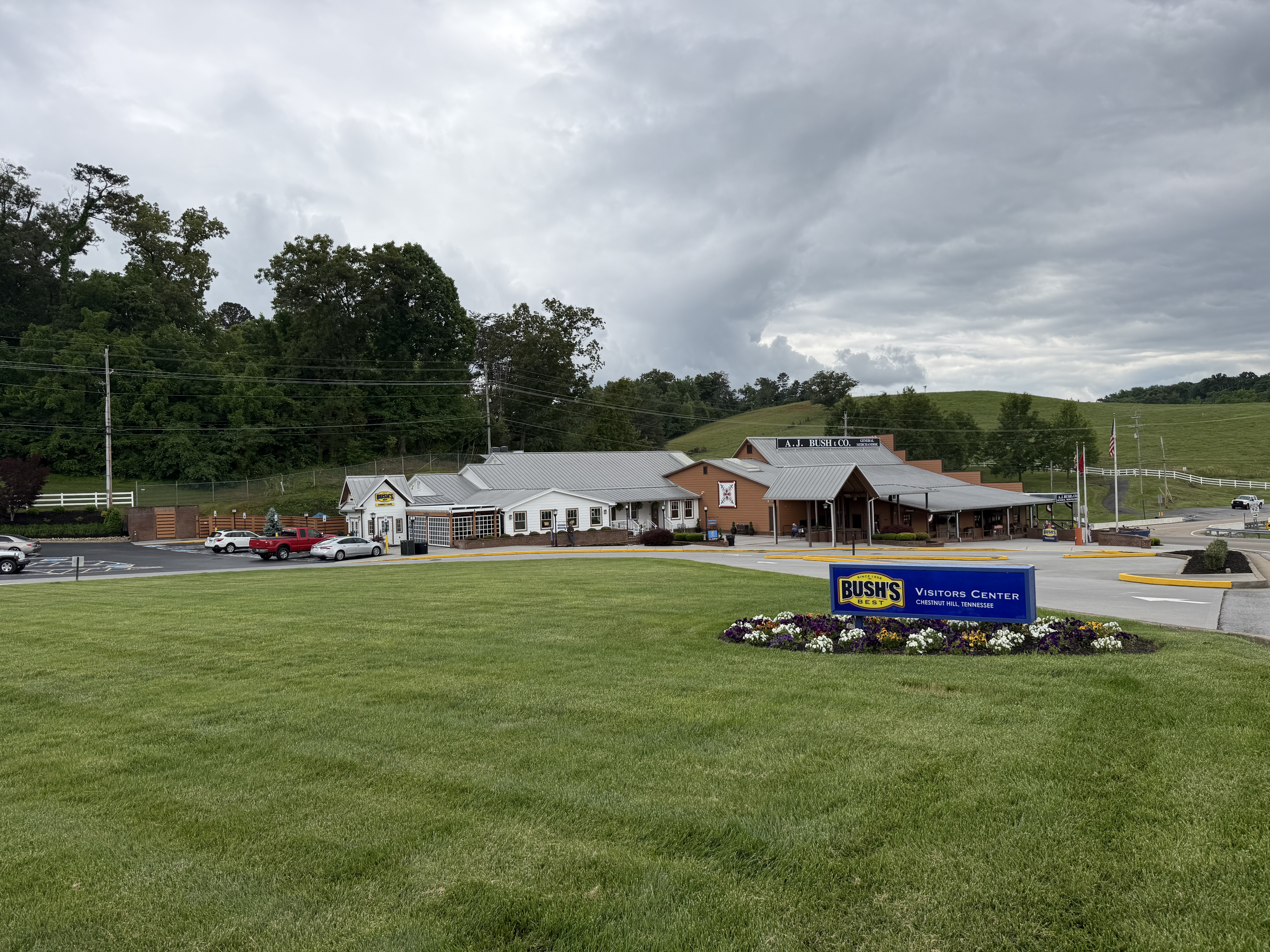
You do not expect one of the most recognizable brands in the American grocery aisle to come from a dot on the map like Chestnut Hill, but that is exactly the story. Back around 1897, a local schoolteacher named A.J. Bush was running a little two-room country store here. He had a problem a lot of small-town fathers had: there was no work to keep his kids, or anybody else's, from leaving for the city. So he set out to build something that would let them stay. A planned hosiery mill turned into a tomato cannery when the Stokely family offered up the equipment, and in 1908 A.J. and his two oldest sons, Fred and Claude, formally launched Bush Brothers & Company.
For decades it was tomatoes. The famous baked beans did not even arrive until 1969. But that humble bean took over: today Bush's makes something like eighty percent of all the canned baked beans eaten in this country, and the company is still owned and run by the Bush family, several generations deep. They moved the headquarters to Knoxville
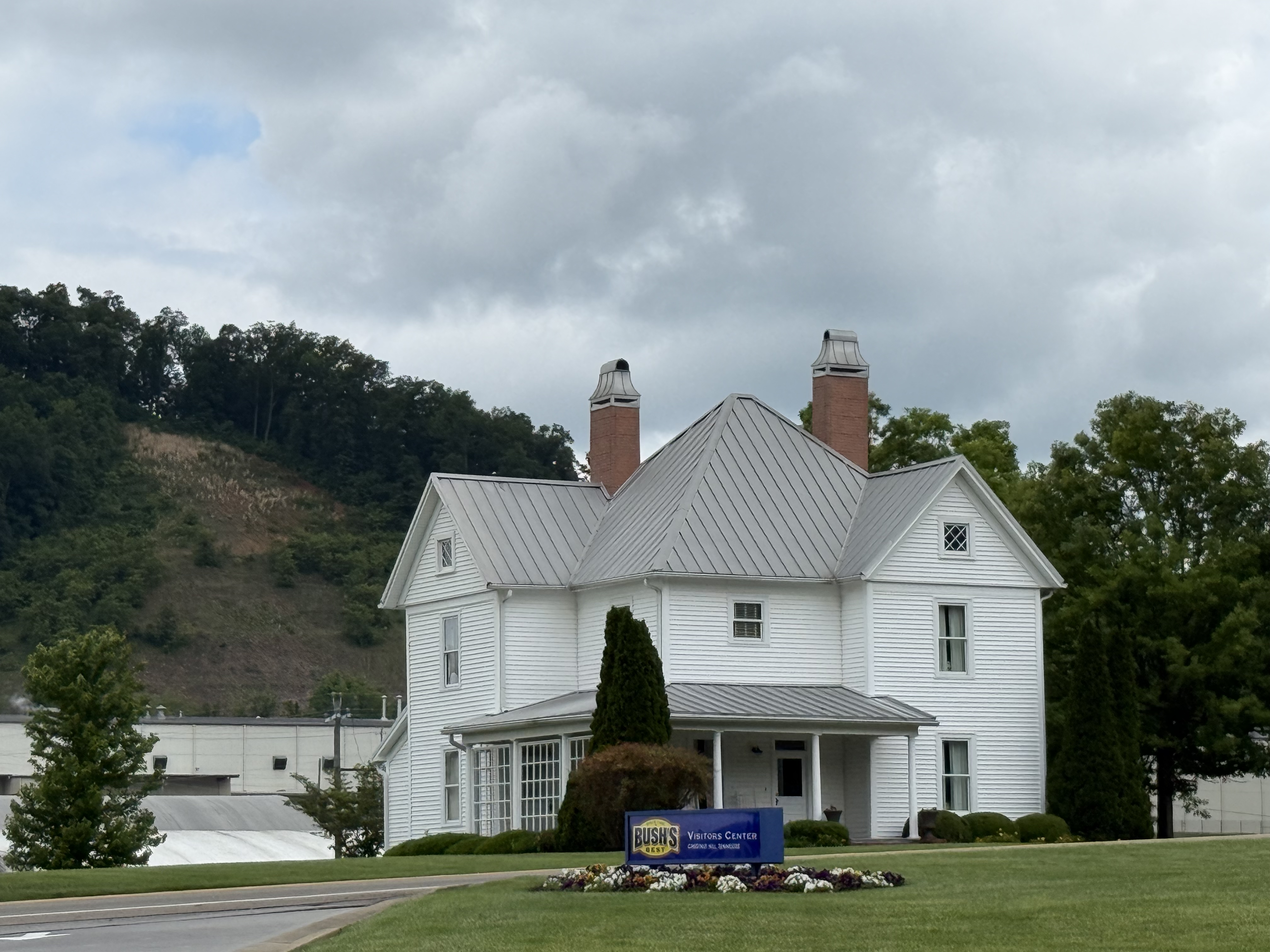
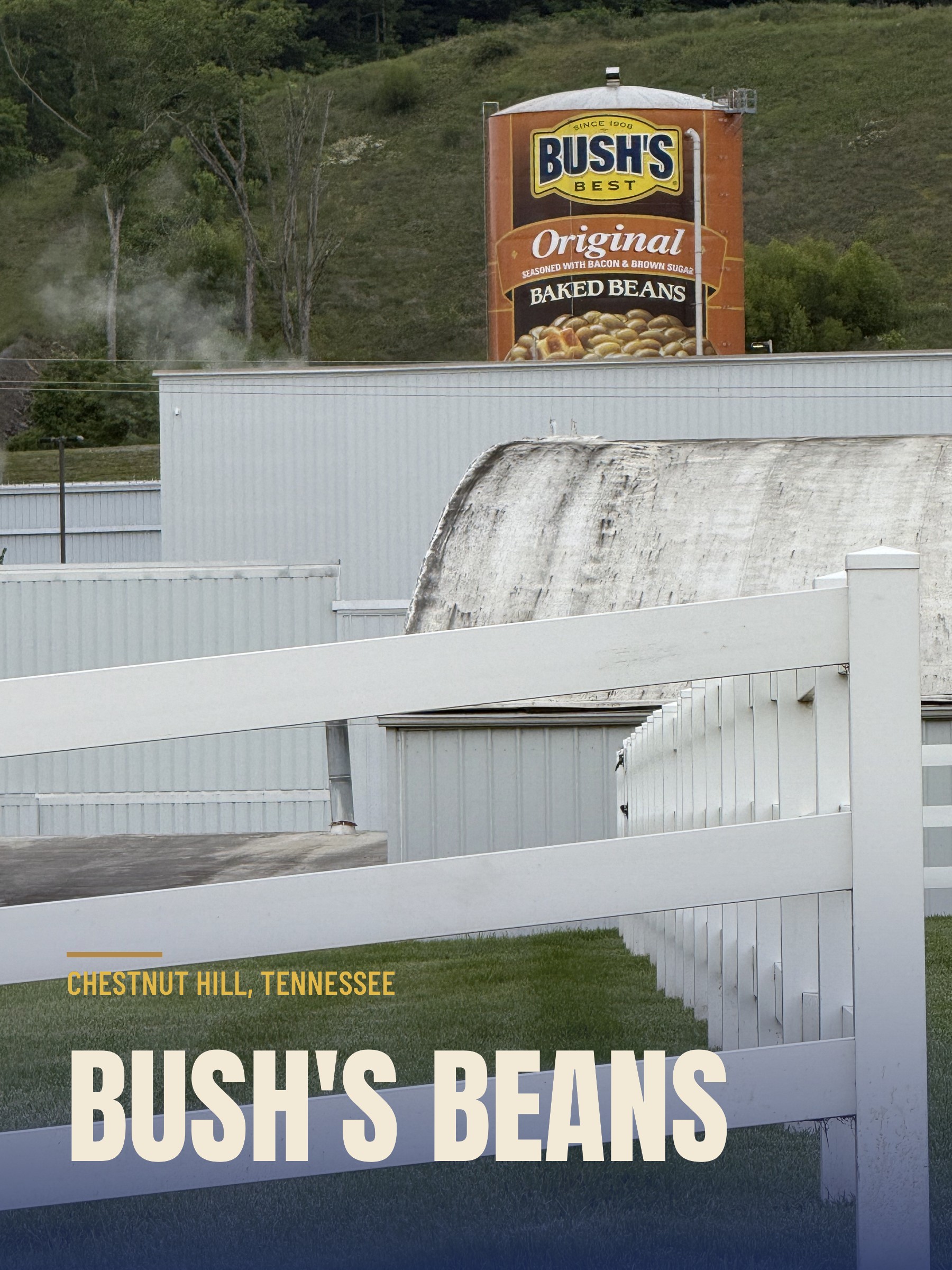
back in the nineties, but the main plant never left Chestnut Hill, and the visitor center sits in the original A.J. Bush general store, right in the shadow of the canning plant across the highway. The whole place started as one man's plan to keep his town together, and it worked better than he could have dreamed.
You can't tour the plant, but you'll still learn how it's done
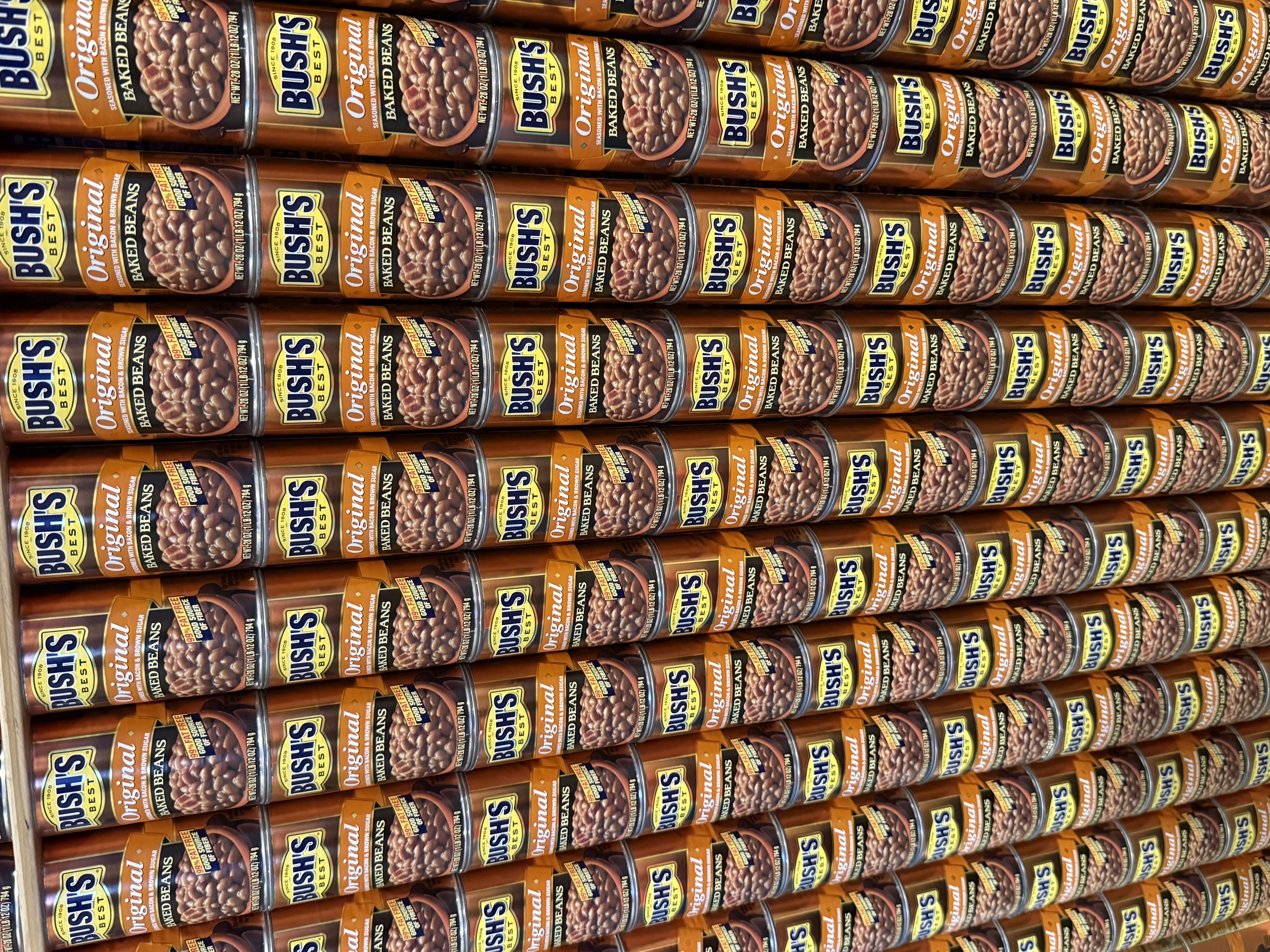
Here is the one thing to know before you go: there is no factory tour. Food-safety rules keep the public out of the actual cannery, which is a letdown for about four seconds until you realize the museum and theater do the job better anyway. The theater rolls a virtual tour of the line, and somewhere in there I picked up the detail I keep retelling people. Every can of Bush's gets a single piece of bacon dropped in the bottom first. Then the beans, then the sauce, then they seal it up and cook the whole thing right inside the can. No giant kettle, no transfer line. The can is the cooking pot. I had eaten these beans my whole life and never once thought about how they get made.

The rest of the museum leans all the way into the quirk, which is exactly what you want from a roadside stop. You can step on a big floor scale and find out your weight in beans, then see how you stack up against Duke. There is a giant can of Bush's you can walk into and a polished golden bean the size of a beanbag chair, plus a row of touchscreen exhibits with names like "Do You Know Beans?" that are aimed at kids but will absolutely suck in the adults too. Across the road, you can catch a glimpse of the working plant and its own oversized can looming over the operation.
Duke, the dog who will not spill the beans
No Bush's pilgrimage is complete without paying respects to Duke. If you owned a television any time after the mid-nineties, you know the bit: A.J.'s great-grandson Jay Bush leans into the camera, says "Roll that beautiful bean
footage," and his golden retriever spends the entire commercial scheming to sell off the Secret Family Recipe to the highest bidder. Jay trusts him with it precisely because a dog can't talk. The line debuted in 1994, Duke joined in 1995, and the campaign worked so well it reportedly pushed Bush's from under half the market to that eighty-percent stranglehold it still holds. The recipe itself is teased but never told: specially cured bacon, brown sugar, and a secret blend of spices, and that is all you are getting. Fun fact we picked up: the real-life dog had stage fright, so over the years a string of stand-in goldens have actually played Duke on camera. The store is loaded with Duke, from the bean-can T-shirts to a wall of memorabilia, and the staff will tell you the same thing Jay does. The recipe is safe, because Duke still isn't talking.
Best of all, the whole thing is free. No ticket, no gimmick, just a genuinely fun hour learning how a country storekeeper's plan to keep his family home turned into a national institution with a talking dog for a mascot. It is the rare roadside attraction that over-delivers on every count.
More from this stop:
Dandridge: The Town Named for a First Lady — and the Wall That Keeps the Lake Out → ·
Gallery